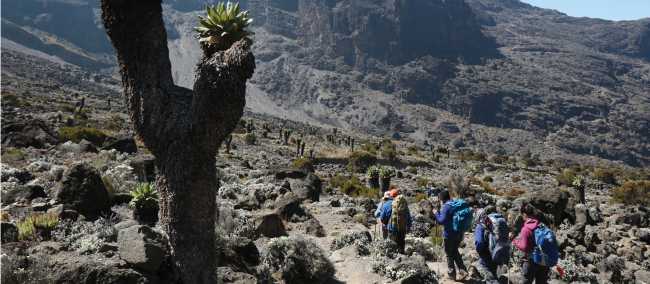
Exploring around Barranco Wall | Kyle Super
Kilimanjaro isn’t just another hike. From park fees to porter support, here’s why some climbs cost more – and what to look for in a guided trip that gets you to the summit safely and responsibly.
Why do Kilimanjaro trips vary in cost?
A huge part of the cost of any Kilimanjaro trek comes down to the national park fees – and they’re set by the Tanzanian government, not the tour company. These include:
- Conservation fees (charged per person, per day)
- Camping or hut accommodation fees
- Rescue fees
- Additional summit or crater fees depending on route
The more days you spend on the mountain, the more fees you pay – and that’s before factoring in guides, porters, equipment and logistics. So it’s easy to see why an 11-day trek costs more than an 8-day version.
Why choose a longer or higher-cost route?
Shorter treks like the Rongai or Machame routes are great for fit travellers on tighter budgets or schedules, but longer options like Lemosho or the Northern Circuit offer more gradual altitude gains and quieter trails. These longer treks give:
- Better acclimatisation = higher chance of summit success
- More scenic variety across multiple ecological zones
- A quieter, less trafficked experience
- Added safety buffer at altitude
In the long run, those few extra days could be the difference between turning back early and reaching Uhuru Peak.
Not all Kilimanjaro treks are equal
Some budget operators offer the bare minimum – then charge extra for things like meals, safety gear or adequate porter support. At World Expeditions, all essentials are included from the start, so there are no surprises later. Our Kilimanjaro treks include:
- All Kilimanjaro National Park and rescue fees
- All meals during the trek, freshly prepared by mountain cooks
- High-quality group camping equipment (tents, tables, kitchen)
- Licensed guides, assistant guides, cooks and full porter support
- Daily pulse oximeter checks for altitude monitoring
- Portable altitude chamber on every climb
- Private vehicle transfers to and from the trail
- Responsible waste management following Leave No Trace
You also trek responsibly
We go further than most when it comes to supporting our team on the mountain. Our porter policy ensures fair wages, proper meals, capped loads (20kg), good shelter and uniforms – plus emergency support. That’s included in the cost of your trip, not added as an afterthought.
A note on licensed operators
One of the most important things to understand is that Kilimanjaro can’t be climbed solo. All treks must be arranged through a licensed operator – and that’s one of the main reasons guided trips seem expensive at first glance. But when your climb includes experienced guides, qualified first-aid personnel, professional support staff, permits, park fees and ethical porter care, you're not just paying to walk – you're investing in your safety and in the success of your summit.
Our Current Kilimanjaro Routes – Which One Should You Choose?
| Trip Name |
Why Choose This Trip |
Duration |
Trip Grading |
Trip Link |
| Kilimanjaro - Rongai Route |
Shorter and more affordable – drier, quieter trail ideal for those with less time or looking to trek in the wet season. |
8 days |
Moderate to Challenging |
View Trip |
| Kilimanjaro - Machame Route |
One of the most popular options – offers great scenery and solid acclimatisation in a slightly shorter format. |
9 days |
Moderate to Challenging |
View Trip |
| Kilimanjaro - Lemosho Route |
Best all-round option – outstanding acclimatisation, fewer crowds and highly scenic throughout. |
10 days |
Moderate to Challenging |
View Trip |
| Kilimanjaro - Remote Northern Circuit |
Our longest and most remote route – highest summit success rate and ideal for a true wilderness experience. |
11 days |
Moderate to Challenging |
View Trip |
| Twin Peaks (Mt Kenya & Kilimanjaro) |
Ultimate East African challenge – summit Mt Kenya before tackling Kilimanjaro. Ideal for experienced trekkers wanting more. |
17 days |
Challenging |
View Trip |